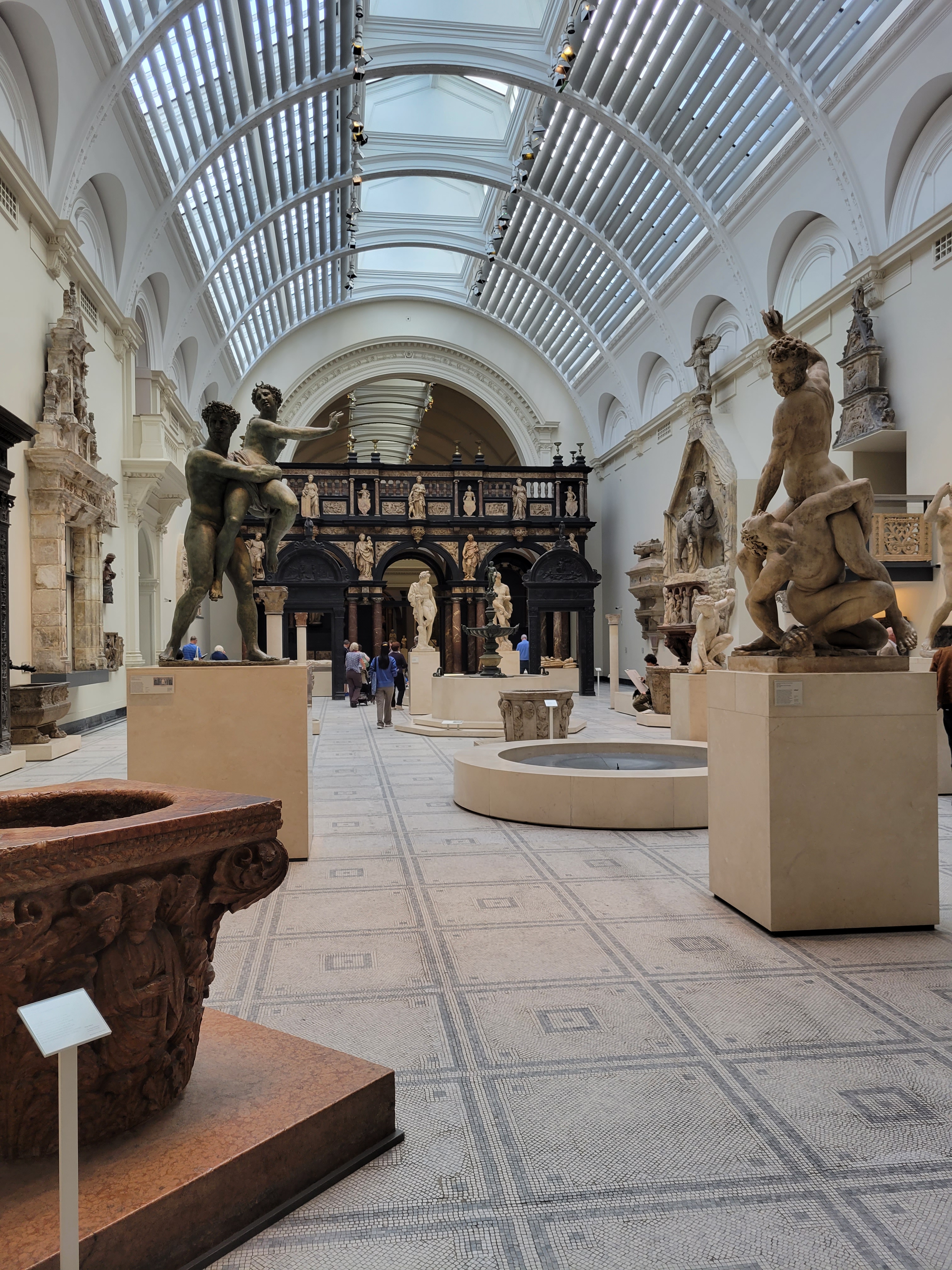
By: Katie Gallinghouse
What are collections, who is doing the work, and where we are in the modern museum landscape.

What are collections?
What are museum collections? A technical definition: collections are objects held by the museum and used for presentation, research, and exhibits (Kling, n.d.).
Do All Museums have Collections?
That all depends on your definition of a museum, but the short answer is no. Children’s museums and science museums often do not have set collections; instead, they focus on hands-on exhibits that emphasize learning (Young, 2019).
So Collections Are Just Objects?
On the surface, one could argue that collections are merely objects, but this overlooks their essential role in museum operations (Labrador, 2025). Collections are an “essential aspect of museum operations that centers on the care, organization, and accessibility of managing a museum’s objects” (Labrador, 2025, 0:15-0:21)

Who Works in Collections?
Those who work in collections can hold many professional titles, including curator, registrar, collections manager, and archivist, among others (Young, 2019). Depending on the size and scale of the museum in question, these professional titles can perform the same duties.
Now that we know some of the professional titles associated with the collections field, we need to understand what they entail.
What are Curators Doing?
Are curators hiding in the dusty collections storage all day? I would say it depends on the day of the week.
The primary responsibilities of collections staff include adding and removing objects to the collection, documenting information about the objects, properly storing and displaying items, and ensuring the care of items for use by future generations (Labrador, 2025).
Over the years, these standards and practices have evolved, been refined, and transitioned from physical to digital formats.

Technology in Collections Management
A big part of collections work is the documentation of objects to keep as complete a record as possible. Museum objects require information to add value and context to the objects (Ray, 2025). Items within a museum collection that lack information lack the necessary context to fit them into the stories the exhibits are telling (Ray, 2025).
Through modern technology, databases have been established, allowing museums with the appropriate staff and funding to digitize their collections and accompanying records (Ray, 2025). This technological expansion enables the collection and dissemination of information to the broader public, aiding in the dissemination of knowledge (Ray, 2025).
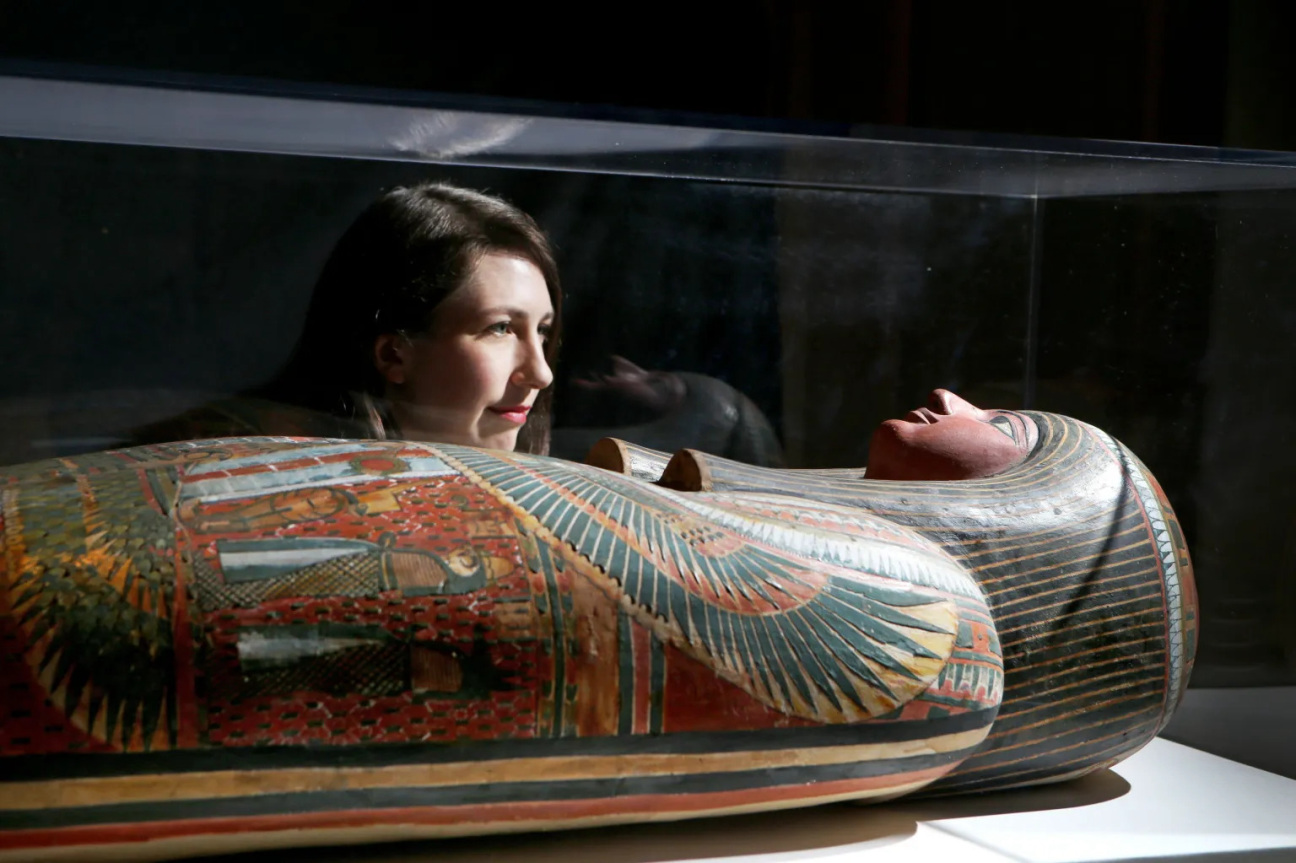
We Know DEAI is Important, but How Does it Factor into Collections Work?
While all aspects of DEAI (Diversity, Equity, Accessibility, and Inclusion) are essential, for this reflection, I have chosen to focus on inclusion in the collections world.
Inclusion in Collections
Unfortunately, museums have a long history of separating objects from their cultural contexts and the communities that created them. This separation results in an object lacking its full story and purpose (Bazan et al., 2021). Repatriation seeks to rectify this separation.
To understand inclusion in collections, you first need to understand what repatriation means.
Repatriation- “The return of human remains and cultural material to source communities” (Bazan et al., 2021).
Repatriation enables the inclusion of source communities within the narrative of an object.
This inclusion should always start with the source community to ensure the partnership is genuine and not performative (Bazan et al., 2019). The potential for collaboration with and inclusion of source communities allows for amplification of marginalized voices in the museum space (Bazan et al., 2021).

My Understanding of Collections
I do not currently have experience in these collection spaces, especially not in a traditional museum. I do, however, work at a zoo and have learned how living collections are managed under the Association of Zoos and Aquariums.
With animals cared for in accredited zoos or aquariums, there is a rhyme and reason to how animals are moved between zoos and whether animals are chosen to reproduce or not.
Animals are transferred between institutions and selected for breeding based on Species Survival Plans developed for endangered animal species. Based on genetic compatibility, animals are transferred to ensure continued genetic diversity.
Often, zoos are unable to keep multiple breeding-age males of the same species due to competition for dominance. For this reason, zoos do their best to manage when and if animals get pregnant. If an animal is pregnant, a zoo must decide whether the new arrival can stay with the existing group or if it needs to be transferred to maintain the continued harmony of the exhibit.
While I may not have what is considered “traditional” collection knowledge, I have enjoyed learning about living collections in my current role and hope to continue to expand my knowledge.
Sources:
Barlow, J. (2023). A woman looks at Egyptian priest Nehemsumut at the National Museum of Scotland [Photograph]. Cultured Article. https://www.culturedmag.com/article/2023/02/08/museum-repatriation-politics-indigenous-artifacts/
Bazan, E., Black, S. W., Thurn, N., & Usbeck, F. (2021). Repatriation, Public Programming, and the DEAI Toolkit. Journal of Museum Education, 46(1), 27–37. https://doi-org.proxy1.library.jhu.edu/10.1080/10598650.2020.1847501
Grace, K. (2019). Larry Page of the Florida Museum in Gainesville shows off a standard setup for making digital images of specimens [Photograph]. Science Article. https://www.science.org/content/article/report-urges-massive-digitization-museum-collections
Kling, A. (2019, May 1). Collections 101: What’s a Collection? Does your collection have good provenance?. Cincinnati Museum Center. https://www.cincymuseum.org/2019/05/01/collections-101-whats-a-collection-does-your-collection-have-good-provenance/
Labrador, A. (2025). Lecture 1: Museum Collections [Video]. Retrieved from https://jhu.instructure.com/courses/103490/pages/m03-lecture-1-museum-collections-2?module_item_id=4845499
Memphis Zoo. (2025). Sumatran Tiger with Mouth Open [Photograph]. Memphis Zoo Webpage. https://www.memphiszoo.org/sumatran-tiger
MOMAA (2025). Collections Staff Members Assesses a Painting [Photograph]. MOMAA Blog Post. https://momaa.org/art-collection-management-professional-strategies-for-serious-collectors/?srsltid=AfmBOoqw-T-U2GJIBUMW8XY3wYIfJMAQV-7mmVbMLuCyXrp5TrsJf5Y4
Ray, J. (2025). Digital Curation what is it? [Video]. Retrieved from https://jhu.instructure.com/courses/103490/pages/m04-lecture-1-digital-curation-2?module_item_id=4845519
Trustees of the Natural History. (2024). Specialist Handles Natural History Materials [Photograph]. The Economist. https://www.economist.com/culture/2024/03/07/museums-have-a-hoarding-problem
Young, T. (2022). So you want to work in a museum?. Bloomsbury Publishing USA.
 Life at the Museum